
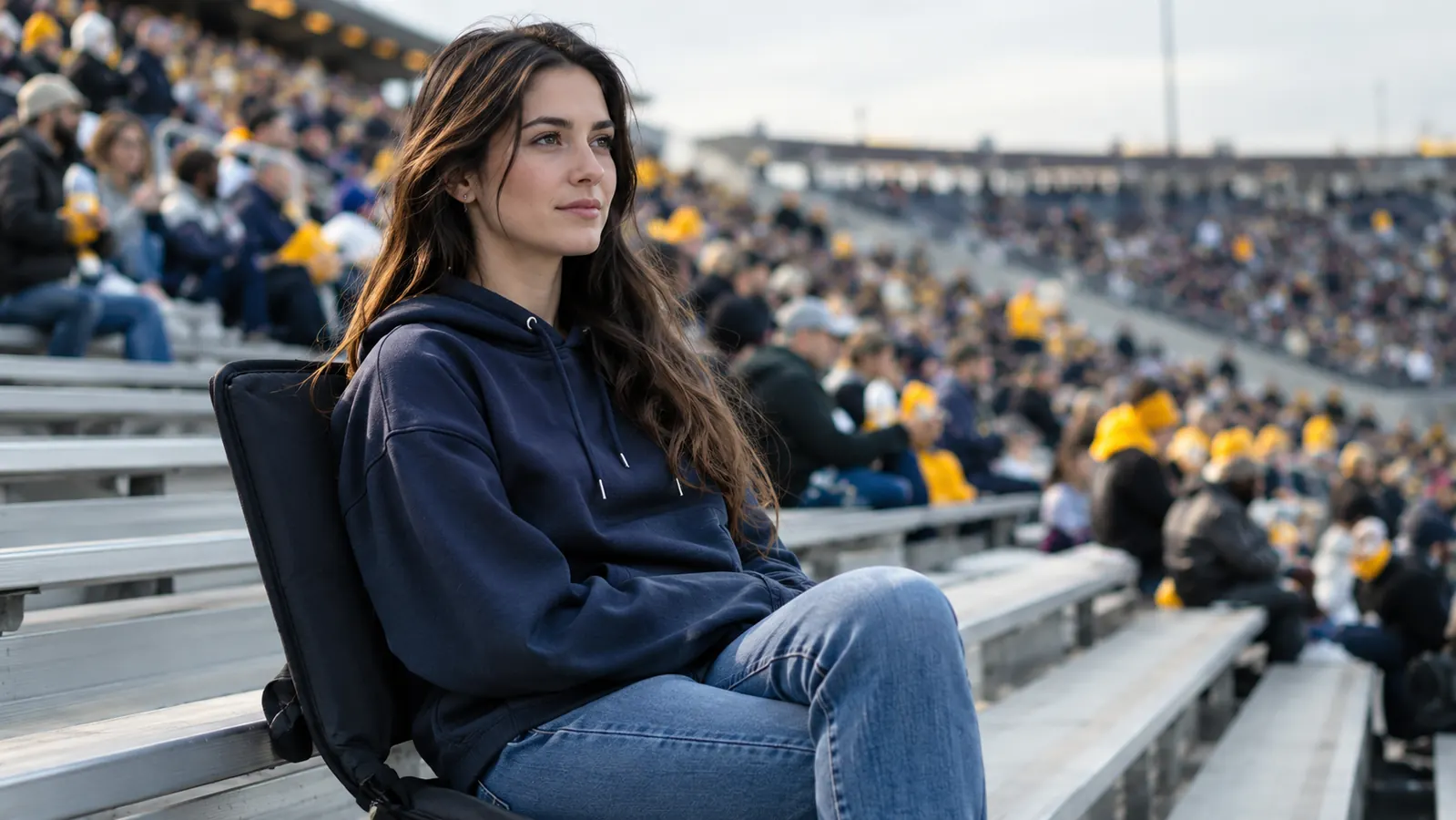
I have spent more Friday nights on metal bleachers than I can count. Between Jalen's high school games, a few college Saturdays, and the one road trip we plan every football season, I know exactly what happens to your back by the third quarter. You start slouching. Then you start shifting. Then you end up with a numb leg and a mood that matches the scoreboard when your team is losing. The bleacher is the problem, not the game.
After years of layering blankets and sitting on a folded jacket, I finally bought a stadium seat with back support. The one I use is the SPORT BEATS Stadium Seat with Back Support Folding Chair for Bleachers, and it changed how I watch football. This guide is the routine I use to survive long games without turning into a stiff, sore version of myself by the fourth quarter.
Skip the Numb Legs, Watch the Whole Game
The SPORT BEATS stadium seat clips onto most bleachers, folds flat, and gives your back somewhere to rest so you can actually cheer.
Amazon Check Today's Price on Amazon →Step 1: Claim Your Seat Early
Bleacher seating is first come, first served, so the best thing you can do for your back is get there before the crowd. I aim to arrive at least twenty minutes before kickoff, sometimes thirty if it is a big game. That gives me time to find a row that is not directly behind a support beam and not so close to the railing that everyone steps on my toes.
When you find a good spot, wipe the bench down before you set anything up. Metal bleachers collect dust, old popcorn, and the occasional mystery stain. A quick pass with a paper towel or a small pack of wipes keeps your seat clean and keeps you from sitting in something you do not want to think about. I keep a pack of wipes in my bag every single game.
Check the spacing between the bench slats too. The SPORT BEATS seat clips onto most bleacher benches, but it works best when the slats give the clips something solid to grab. If the row feels too narrow or too wide, move a few feet down before you commit. Moving a seat is easy. Moving after the game starts is a production.
Step 2: Set Up the SPORT BEATS Before You Sit
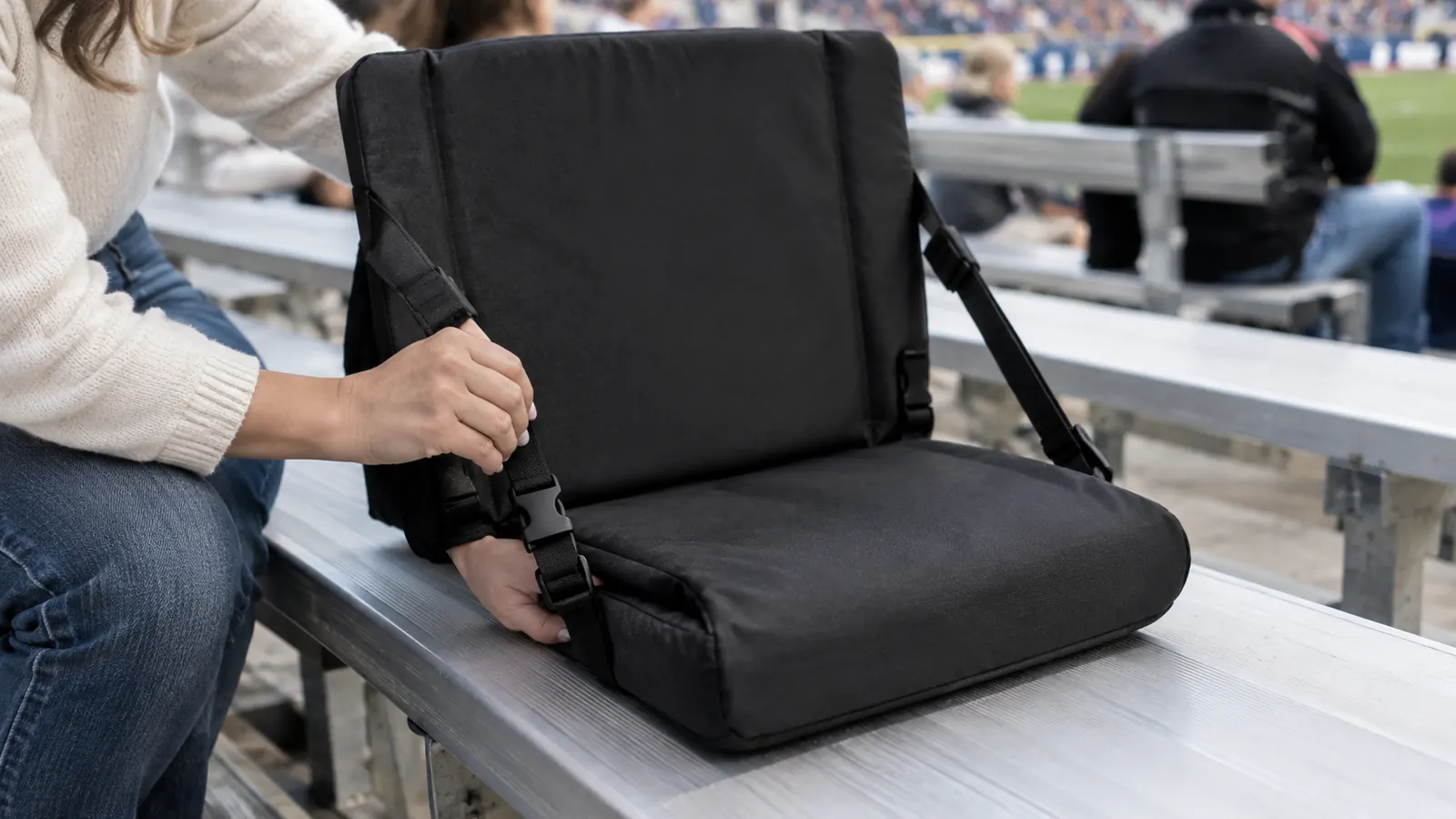
Pull the seat out of your bag and unfold it on the bench while you are still standing. The SPORT BEATS design folds flat, so it is easy to carry and easy to set up. Give it a little shake so the frame locks into place, then press the backrest up until it clicks. Most versions take less than a minute to go from folded to ready.
Next, make sure the base sits flat on the bench. If the bench has a slight slope, shift the seat until it feels level under your hands. The clips on the bottom hook over the front edge of the bleacher, which keeps the seat from sliding forward when you lean back. Give it a quick tug to test it before you sit down. If it moves, adjust the clips.
I also like to set up my seat while I am still holding my game day bag. That way I can drop the bag behind me or under the seat without having to get up again. Once the SPORT BEATS seat is clipped in, it stays put even when people squeeze past you. That is worth a lot on a crowded row.
Step 3: Sit Back and Let the Support Do the Work
This is the part that took me a while to trust. A bleacher seat with back support actually lets you lean back, and when you do, your lower back stops doing all the work. I sit all the way back, let my shoulders rest against the support, and keep my feet flat on the bench or the footrest below. That position takes pressure off my hips and keeps my legs from falling asleep.
Do not slouch forward just because you are used to leaning in on the edge of the bench. The whole point of the back support is to give your spine a resting spot. If you are used to sitting straight up for three hours, your lower back will thank you for the extra support. I noticed the difference most in the fourth quarter, when everyone around me was shifting and I was still comfortable.
One thing I learned the hard way: give yourself a little room between your knees and the person in front of you. If you sit too close, you cannot lean back all the way without bumping the row behind you. Find your spot, sit down, then adjust your legs. A few inches makes a big difference.
Step 4: Handle the Cold and Rain Without Losing Your Spot
Cold bleachers drain the warmth right out of you. I wear layers, and I put a small blanket or a seat cover over the SPORT BEATS seat when the temperature drops. The seat gives me a dry base even when the bench is wet from rain or morning dew. That alone is worth the hassle of carrying it into the stadium.
For rainy games, I bring a lightweight poncho and a trash bag to cover the seat during halftime if the rain picks up. The SPORT BEATS frame is made to be outdoors, but I still like to keep the cushion part as dry as I can. When the game resumes, I brush the water off, sit back down, and stay dry for the rest of the afternoon.
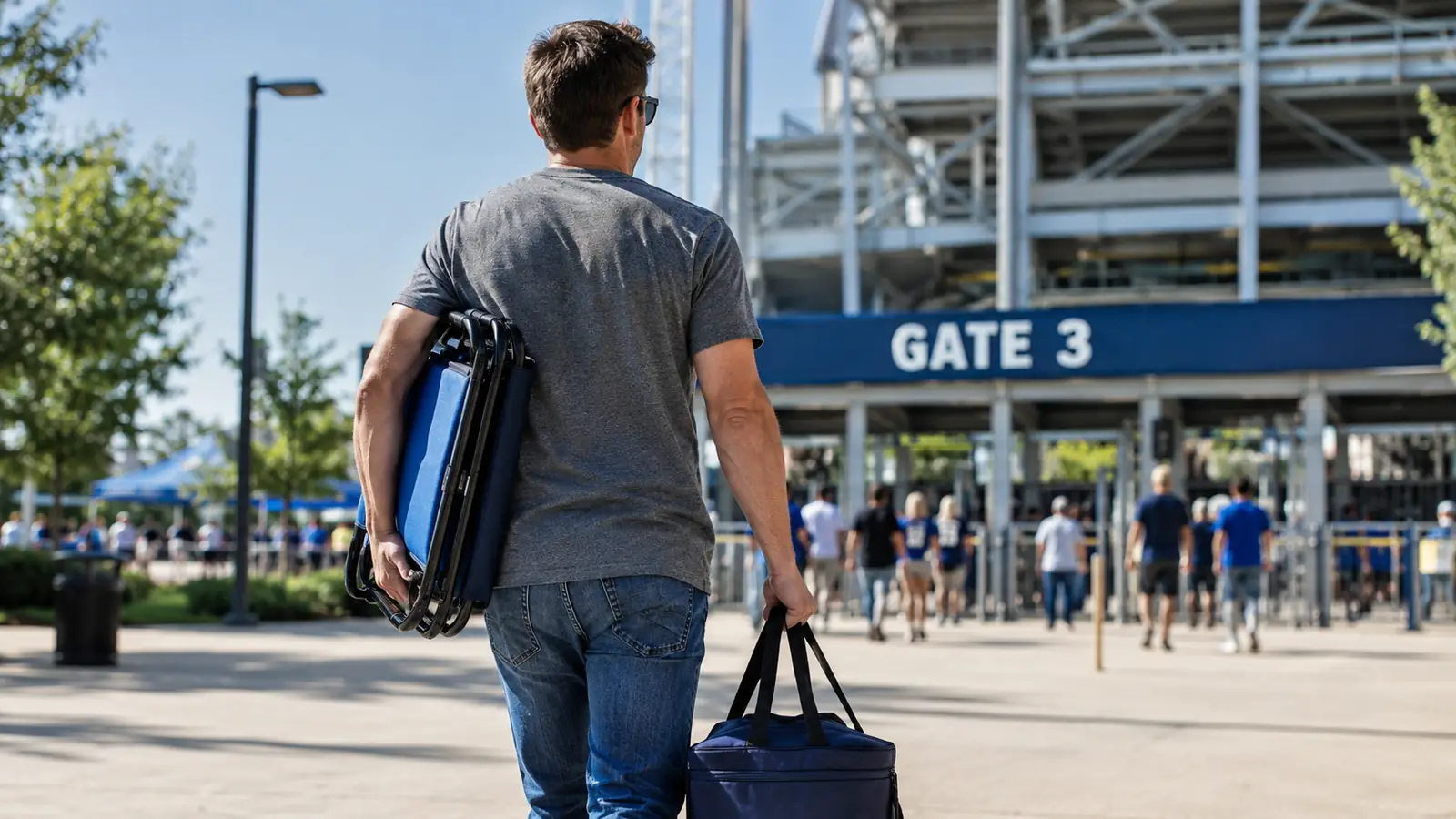
If you are tailgating out of a midsize SUV like I do, keep the seat in the back until you are ready to head in. That keeps it dry and makes the walk to the gate easier. I also toss a hand warmer in my coat pocket on cold days. The seat handles the hard part, but my hands still need their own help.
Step 5: Pack Up Fast and Keep It Clean
When the final whistle blows, do not rush off and leave the seat behind. I fold the backrest down, give the seat a quick shake to get rid of crumbs and dirt, and clip it shut. The SPORT BEATS seat folds flat enough to fit back into my game day bag or under my arm, so I can get out of the stands without wrestling with a bulky chair.
I wipe the seat down when I get home, especially after a rainy game or a game with a lot of concession spills. A damp cloth and a little mild soap take care of most messes. Then I let it dry completely before I store it. That keeps the cushion in good shape for the next Friday night.
A little care goes a long way. My SPORT BEATS seat has been through a full season of high school games, a college weekend, and our annual road trip, and it still looks and works like it did on day one. The clips are tight, the back support is sturdy, and it folds up just as easily as it did the first time.
Why the Back Support Matters More Than You Think
The first time I used a stadium seat with back support, I did not expect it to make that much difference. I had spent years telling myself that the numbness and stiffness were just part of watching football. Turns out, they were not. The back support changes your posture. Instead of perching on the edge of a metal bench, you are sitting in a chair, and your spine is not fighting gravity for three hours.
That change matters for the whole day. When I get home from a game now, I can still stand at the kitchen counter and make snacks for the watch party the next day. Before, I would be on the couch with a heating pad. The seat does not make the game shorter, but it makes the rest of the day easier.
What I'd Tell a First-Time User
If you have never used a stadium seat with back support, give yourself a full game to get used to it. The first quarter will feel different because you are not perched on the bench. By halftime, it will feel normal. By the fourth quarter, you will wonder why you waited so long.
Also, practice folding and unfolding it at home once. There is nothing worse than fumbling with a seat while the anthem is playing and everyone around you is already standing. Five minutes in your living room saves you a minute of fumbling in the stands.
How to Keep Your Seat From Sliding
Most bleachers have a lip on the front edge, and the SPORT BEATS clips grab that lip. But older stadiums have worn benches, and some have gaps between the slats. If you feel the seat shift, adjust the clips so they sit on the thickest part of the lip. A firm press down after you clip it in also helps.
If your stadium has smooth concrete benches instead of wood slats, the seat still works because the clips tighten around the edge. Just give it an extra tug before you sit. The few seconds it takes are worth the peace of mind.
How to Make the Seat Last for Years
I have used my SPORT BEATS seat for a full season of Friday night games, a college weekend, and our annual road trip. The frame is still tight and the cushion is still comfortable. The only maintenance I do is wipe it down after wet games and let it dry before storing it.
Store it somewhere dry and out of direct sunlight. A trunk or a closet shelf works fine. If you keep it in the car during the summer, the heat can break down the foam over time. I bring mine inside after the season ends, and it looks as good as the day I bought it.
What Else Helps
A stadium seat handles the bench, but a few extras make the whole day better. I always carry a small backpack with a blanket, a rain poncho, hand warmers, and a stadium-friendly snack. I wear comfortable shoes because the walk from the parking lot is longer than people expect. And I keep a phone charger in my pocket, because the fourth quarter is when everyone wants a photo and my battery is always low. None of these things replace the seat, but they make the seat work even better.
I also bring a small stadium cushion for the footrest area, because my feet can get restless on the metal. A folded sweatshirt works just as well. The point is to keep your legs from hanging in a position that makes your knees ache by the end of the game.
And I always keep a spare pair of socks in the car. Wet feet ruin a game faster than anything else. If you tailgate out of a midsize SUV like I do, toss a pair into the back before you head into the stadium. Future you will be grateful.
The first game I used the SPORT BEATS seat, I stood up after the final whistle and my back did not ache. That had never happened before.
Bring Your Own Comfort to Every Game
The SPORT BEATS stadium seat gives you back support, a dry spot, and a better view of the fourth quarter. It folds flat, clips onto bleachers, and makes every game day easier.
Amazon Check Today's Price on Amazon →