
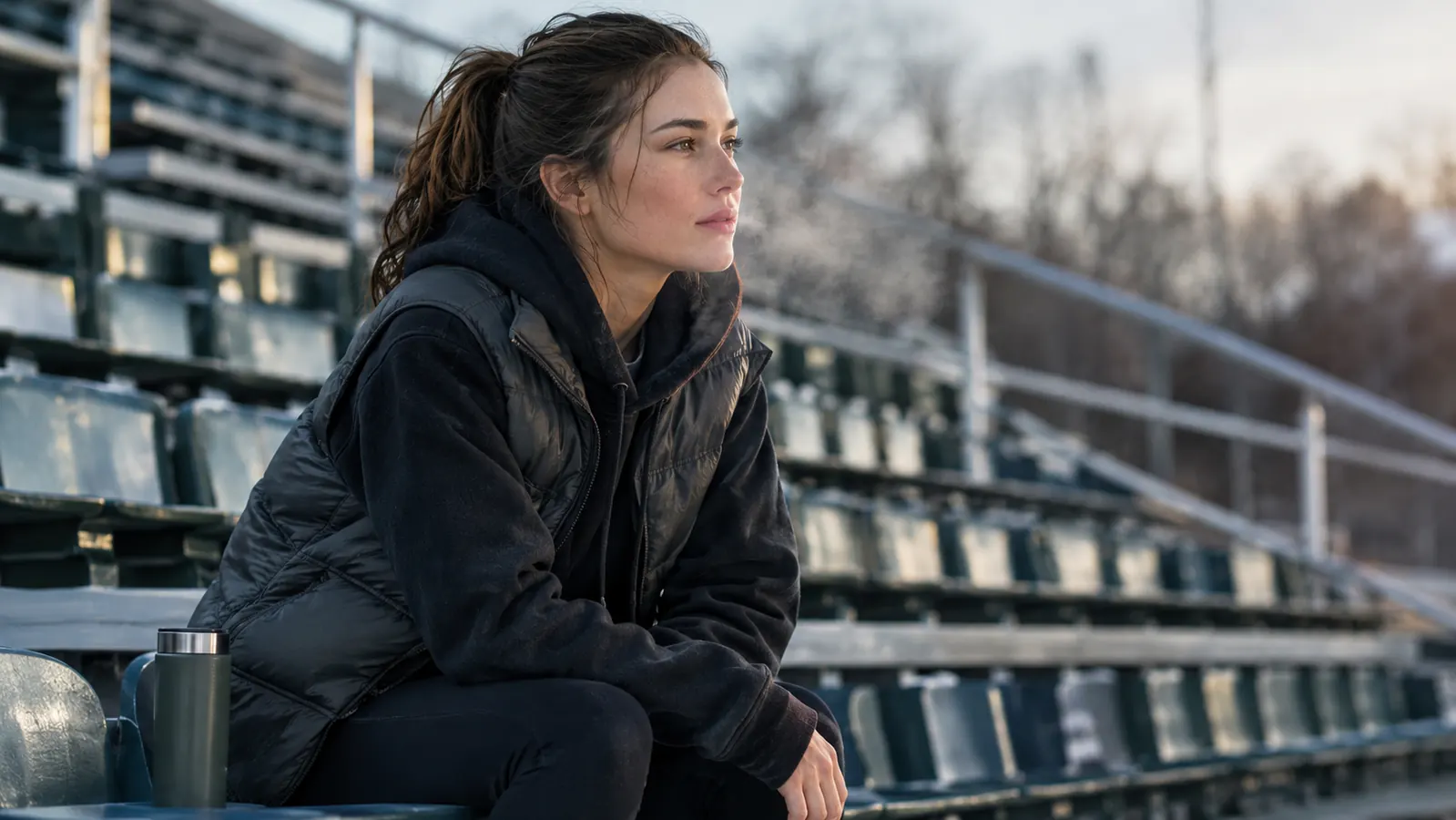
Every fall I make the same mistake. I tell myself I can tough it out in the stands, that a fleece blanket and a second pair of socks will be enough, and by the second quarter I am shivering and checking the score on my phone just to have an excuse to walk to the concession stand. This season I finally stopped playing games with the cold. I bought the ORORO Women's Heated Vest, the one with four heating zones, and I wore it to Friday night high school games, a November college game, two pro games, and more tailgates than I can count.
This is not a quick first impression. I have had the vest since late September, washed it more times than the instructions recommend, stuffed it in a backpack, worn it under a rain shell, and handed it to a friend at halftime when she forgot her coat. Here is what I learned after a full season of cold weather game days.
The Quick Verdict
The ORORO heated vest is the piece of gear I reach for before every cold game now. It heats the right spots, holds a charge longer than I expected, and layers under a team hoodie without making me look like I am wearing a battery pack. It is not a winter coat, and the battery placement took a little getting used to, but for game day warmth it earned a permanent spot in my tailgate tote.
Amazon Check Today's Price →Skip the Shivering and the Third Coat
The ORORO heated vest keeps your core warm for hours with four heating zones and a battery that lasts through the fourth quarter. I wore it all season and it is still my first layer on cold game days.
Amazon Check Today's Price on Amazon →How I've Used It
I am a dental office manager by day, so my game day uniform has to work from the parking lot to the stands. I usually wear a long sleeve tee, a team hoodie, and the ORORO over both. On the coldest nights, I add a light rain shell on top. The vest does not replace a heavy coat, but it changes the math. Instead of three bulky layers that make it hard to raise my arms to cheer, I wear two thin layers and let the heating panels do the work.
My son Jalen plays high school football, so Friday nights in the stands are a weekly test. The temperature at kickoff in late October in North Carolina can drop twenty degrees by the end of the game. I have worn the vest for all of them. I have also taken it to a November college game where it rained for half the first quarter, and to two pro games where I tailgated for two hours before kickoff and then sat in the shade for the whole game.
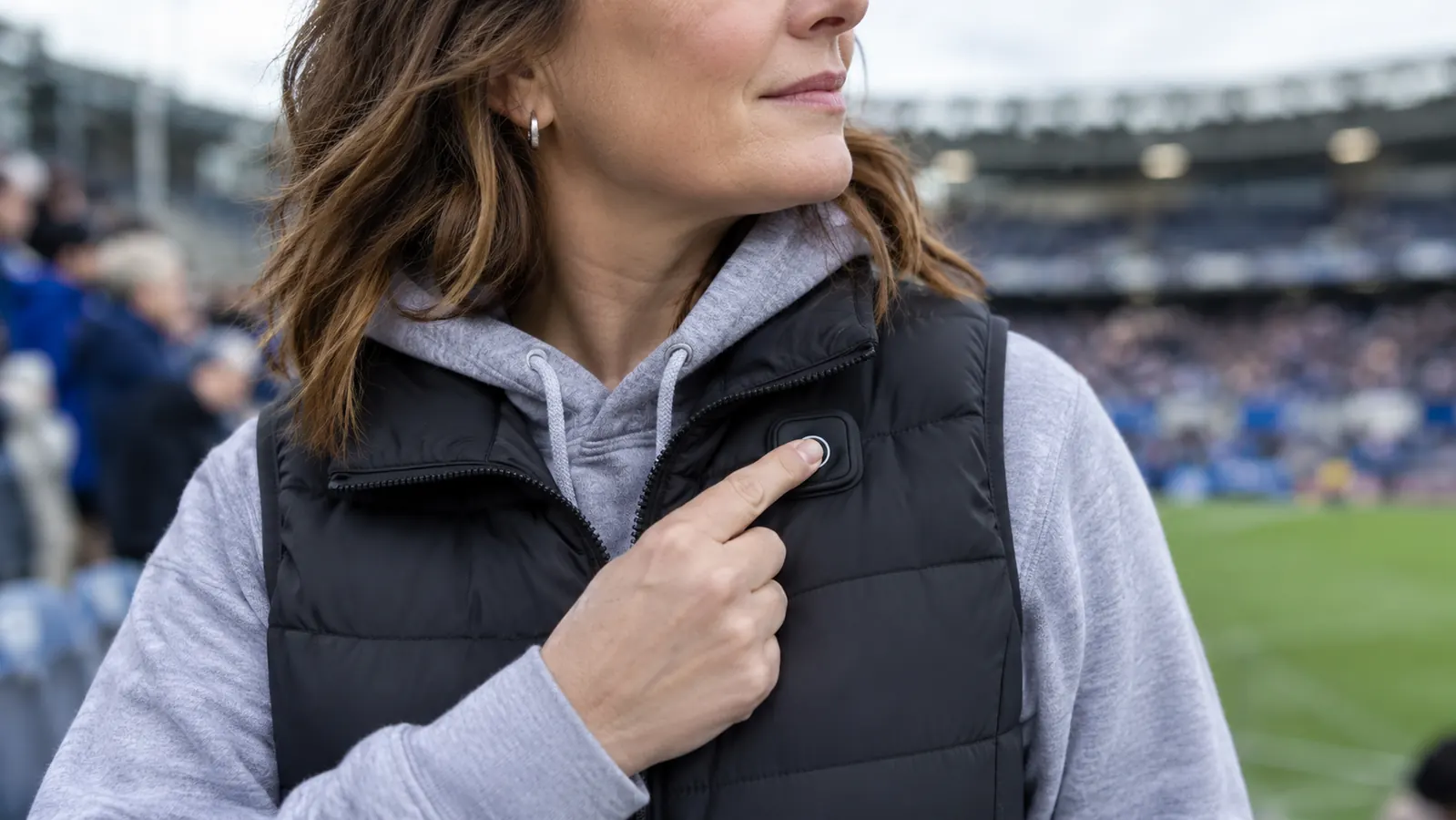
I charge the battery the night before, tuck it into the left chest pocket, and forget about it until I feel the warmth kick in. The controls are three buttons on the chest. One press turns it on, and the other two cycle through low, medium, and high. I can adjust it without taking off my hoodie, which matters when you are holding a hot dog in one hand and your pom pom in the other.
What the Four Heating Zones Actually Do
The biggest reason I chose this vest over a cheaper heated blanket or a disposable hand warmer is the placement of the heating elements. ORORO put four zones in the chest, the back, and both sides. That sounds like a lot of tech, but in practice it means the heat covers the parts of your body that actually get cold first. My hands stay warmer too, because warm blood from your core does more for your fingers than any glove can.
The chest panels are the ones I notice first. They warm up within a minute or two, and on high they put out serious heat. The back panel is the real difference maker. When you are sitting on metal bleachers, your back is pressed against a cold surface the whole game. The back heat keeps that from draining all the warmth out of you. The side panels are less dramatic, but they stop the cold from sneaking in around the zipper.
I have worn the vest under a hoodie and over a hoodie. Over works better because the heat has room to circulate. Under a puffy coat it is almost too warm, which is a good problem to have in January. The vest itself is lightweight, and the heating wires are thin enough that I do not feel them through the lining.
Battery Life in Real Game Conditions
The vest comes with a 7.4V battery pack, and ORORO says it lasts anywhere from three to ten hours depending on the heat setting. I never believe the high end of those claims, so I tested it the way I actually use it. On high, I got about four and a half hours before the battery indicator dropped to one bar. On medium, I made it through a full day of tailgating and a four hour game, with charge to spare.
The battery charges with a standard USB cord, and a full charge takes about three hours. I plug it in when I get home from work on Friday and it is ready by the time we leave for the game. The battery pack fits in the left pocket, and the cord runs through a small hole so the pocket can close. That sounds like a small detail, but it keeps the battery from bouncing around when you stand up to cheer.
The one thing I would warn you about is the charging cable. The vest does not come with a wall adapter, only the USB cable. I already had a spare phone charger, so it was not a problem for me, but if you do not have a USB wall plug, you will need to pick one up. Also, the battery is the part you have to remember. The vest is useless without it, so I keep mine in the pocket with a sticky note that says charge me.
How It Holds Up After a Season of Washes and Tailgates
I was nervous about washing a vest with wires in it, so I followed the instructions exactly. The battery comes out, the cord stays tucked inside, and the vest goes in the machine on a gentle cycle in cold water. I hung it to dry, never put it in the dryer. After a full season, the zippers still work, the snaps on the chest pocket still hold, and the heating panels still get hot in the same spots.
The fabric has held up better than I expected. I have worn it to tailgates where food and dip found their way onto my front, and most of it wiped off with a damp cloth. The one stain that did not come out was from a red sauce that sat overnight. That is my fault for not treating it sooner. The outer shell is not waterproof, but it is water resistant enough to handle light rain and drizzle. I would not stand in a downpour without a rain jacket over it.
The seams around the heating elements have not frayed or pulled, even though I stuff the vest into a backpack for road games. I also loaned it to my husband Darnell during a particularly cold night game. He wears a bigger size, and the vest stretched a little around the shoulders while he had it on, then went back to normal once he took it off. I would not call it unisex, but it is forgiving.

What I Would Change
No product is perfect, and this vest has a few things I would tweak. The battery pocket is on the left side only. If you are left handed, that is great. I am right handed, so the cord crosses my body, and I have to route it carefully to keep it from tugging on the collar. It is a small thing, but I notice it every time I put the vest on.
The heat settings are low, medium, and high, but there is no way to heat just the back or just the chest. Sometimes I want the back panel on without the chest heat, and I cannot do that. You get all four zones or none. For most game days that is fine, but on a mild day when I only need a little warmth, the lowest setting is still a lot.
The collar is thin. When the wind picks up, cold air sneaks in around my neck. I solve that with a scarf, but a slightly taller collar or a fleece lining would make the vest feel more finished. These are not deal breakers. I still reach for the ORORO before any other layer on cold game days.
Alternatives I Considered
Before I settled on the ORORO, I looked at heated jackets, heated vests from other brands, and the cheaper option of just carrying hand warmers. I also considered a battery heated blanket that plugs into the car, but that only helps in the parking lot, not in the stands. A heated jacket covers your arms, which sounds nice, but most of them are bulkier and harder to layer under a team hoodie.
I tried a heated vest from a budget brand a friend loaned me at one game. The heat took forever to kick in, the battery died before halftime, and the control button was placed where the seat belt rubbed against it. The ORORO was noticeably warmer, faster, and easier to use. It also has a stronger reputation. With more than eleven thousand reviews and a four and a half star average, I did not feel like I was gambling on an unknown product.
For my situation, a vest was the right call. I wanted something that worked under a team hoodie, did not add bulk, and kept my core warm so the rest of me stayed comfortable. The ORORO does exactly that. If you run colder than I do or spend the whole game sitting still in extreme cold, a heated jacket or a heavier parka might serve you better. I will talk more about that in a minute.
What I Liked
- Four heating zones cover chest, back, and both sides
- Battery lasts through a full game on medium
- Lightweight and easy to layer under a team hoodie
- Machine washable when you follow the instructions
- Simple three button controls you can use with gloves on
Where It Falls Short
- Battery pocket is on the left side only
- Cannot heat individual zones independently
- Thin collar lets wind in around your neck
- No wall adapter included with the USB cable
On medium, I made it through a full day of tailgating and a four hour game, with charge to spare.
Who This Is For
This vest is for anyone who spends hours outside in cold weather and wants to look like a person, not a marshmallow. It is for the mom who stands on the sideline at Friday night games, the season ticket holder in the shade, the tailgater who is first to the lot and last to leave. If you already own a good team hoodie and just need something to make it warm enough for November, this is the layer you are looking for.
It is also for people who run warm but have cold spots. I am that person. My core stays warm once I get moving, but my back and chest get cold the second I sit down. The vest puts heat exactly where I need it, and I can turn it off when I do not. A friend of mine who is cold all the time borrows mine and cranks it to high. We both get what we need from the same vest.
Who Should Skip It
Skip the ORORO if you need a real winter coat. The vest does not cover your arms, it is not waterproof, and it will not keep you warm in single digit temperatures on its own. It is a layer, not a fortress. If you stand outside for hours in harsh conditions with no way to block the wind, you will still be cold, just less cold than you would be without it.
Skip it if you are left handed and sensitive to a cord running across your chest, or if you want independent control of the heating zones. Skip it if you refuse to deal with charging another device. The battery is essential, and forgetting it means you are wearing a regular vest. None of that makes it a bad product. It just means the ORORO is not the right answer for every cold weather situation.
Make This the Last Season You Shiver in the Stands
The ORORO heated vest kept me warm through a full season of Friday nights, tailgates, and fourth quarter comebacks. If you are tired of layering up like you are going on an Arctic expedition, this is the upgrade that actually works.
Amazon Check Today's Price on Amazon →