
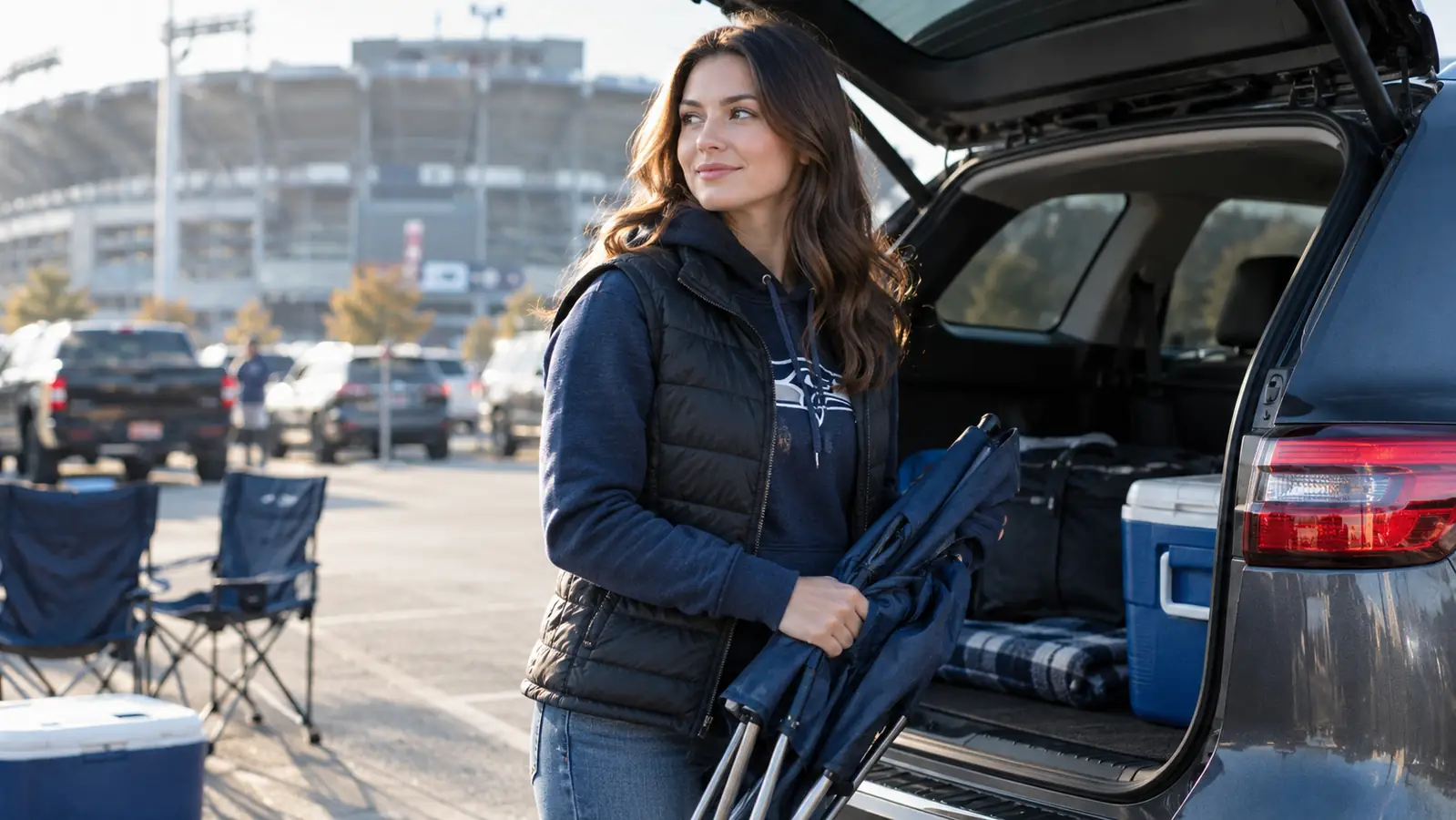
As a dental office manager who lives just outside Charlotte, my fall calendar is built around football. Friday nights find me in the bleachers watching my son Jalen play high school football, and most Saturdays I am in a parking lot next to my midsize SUV, tailgating before a game. I have owned the ORORO Women's Heated Vest for two full seasons, and I have borrowed my husband Darnell's heated jacket on enough freezing nights to know exactly what each one does. The short answer is this: the ORORO heated vest is the piece I pack for almost every game, but a heated jacket wins for one specific kind of cold.
Both options will keep you warm. The difference is where the heat goes, how much freedom you keep, and how the piece fits into the rest of your game day outfit. I tested both the same way I test everything: I wore them to Friday night games, Saturday tailgates, a cold November rivalry game, and a rainy Thursday night when the temperature dropped after halftime. I took notes on warmth, battery life, layering, and how easy each one was to pack in the car. Here is the honest breakdown.
| ORORO Heated Vest | Heated Jacket | |
|---|---|---|
| Heat placement | Four zones on the chest, back, and sides, aimed at your core | Core heat plus sleeves down to the wrists |
| Arm coverage | None, and that is a feature when you need to move | Full sleeves, a real advantage in bitter wind |
| Weight and bulk | Light enough that you forget you are wearing it | More fabric and padding, noticeable by the fourth quarter |
| Layering | Slides under a hoodie, jersey, or rain shell | Usually works best as the outer layer |
| Battery drain | Core-only heat stretches a single charge longer | Heating more surface area drains the same battery faster |
| Best for | Tailgates, walking, and fans who run warm | Deep cold, long stretches sitting still, and cold-sensitive arms |
Where ORORO Wins
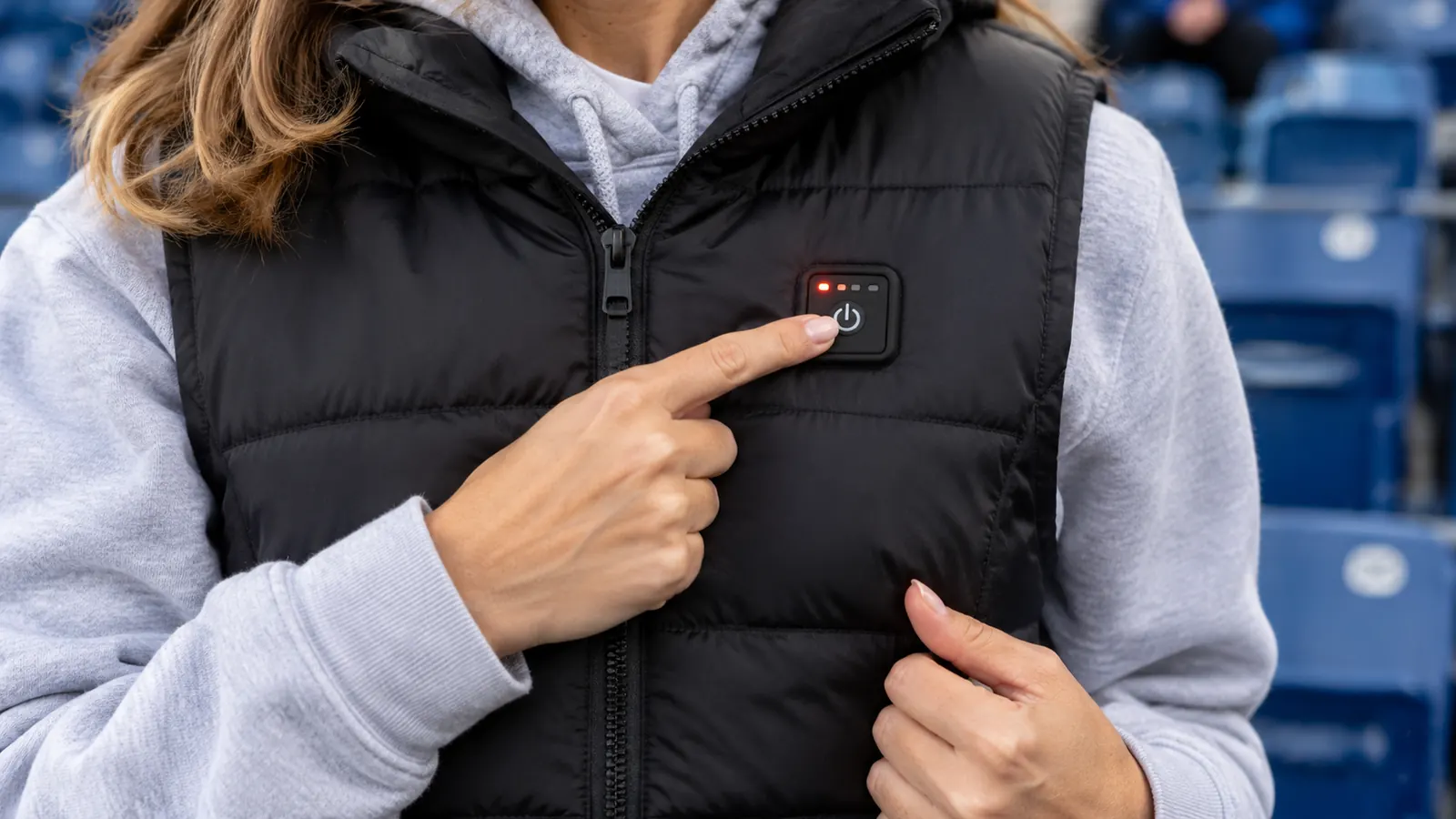
The ORORO heated vest wins for the way it disappears under everything else. I wear it under my team hoodie, over a long-sleeve tee, and sometimes under a rain shell when the sky opens up before kickoff. Because the heat sits on my chest, back, and sides, I get the warmth where I actually need it, and my arms stay free for waving a rally towel, holding a hot chocolate, or helping Darnell haul the cooler out of the back of the SUV. At 4.5 stars from more than 11,100 reviews, it is also the piece I trust to keep working season after season.
The battery life is the other reason I pick the vest. The same battery that heats four zones on my core lasts noticeably longer than it does in a jacket, because it is not trying to warm my arms at the same time. On a typical Saturday, I turn it on low during the tailgate, bump it to medium at kickoff, and I still have charge left when we are walking back to the car. The vest also packs flat into a tote bag, which matters when you are already carrying chairs, blankets, and a cooler.
The four heating zones are placed where a woman actually feels cold first. The chest zone takes the edge off the wind that sneaks in around a scarf, the back zone helps when you are leaning forward in a stadium seat, and the side zones keep your core from losing heat. I have worn it under a jersey on a 40 degree day and under a heavy coat on a 20 degree night, and in both cases the vest did the work without adding bulk.
Where a Heated Jacket Wins
A heated jacket wins when the cold is not just cold, it is bitter, windy, and you are sitting still for three hours. Darnell runs cold, and on a 28 degree night in an open stadium, he wants heat all the way down his arms. The sleeves on a heated jacket make a real difference when you are holding a program or gripping the armrest and your fingers are going numb. If you are the person who wears a heavy coat in October, a heated jacket is probably the better fit.
The jacket also wins for people who do not like layering. Some fans want one piece they can throw on over a long-sleeve tee and call it done. A heated jacket gives you that. It is also the better choice if you have circulation issues or arthritis in your hands, because the sleeve heat reaches your wrists in a way a vest never will. I keep Darnell's jacket in the car for the worst games of the year, and I am glad it is there.
There is also something to be said for the psychological comfort of a jacket. When you are wearing a vest, you still feel the cold on your arms, and for some people that sensation is enough to ruin the experience. A heated jacket removes that distraction completely. If you are the kind of fan who cannot enjoy the game when your arms are cold, no amount of core heat from a vest will change your mind.
The ORORO heated vest is the one I pack for every game.
Four heating zones, a battery that lasts through the fourth quarter, and a fit that slides under your team gear. See today's price on Amazon and read the reviews from 11,100 other fans.
Amazon Check Today's Price on Amazon →What About Rain and Wind?
Game day weather is rarely perfect. I have sat through a steady drizzle, a gusty afternoon, and one game where the wind came straight off the field and never let up. The ORORO heated vest handles a light rain because it sits under your outer layer, so the heating elements stay dry. In a downpour, you will want a waterproof shell over it, and that is easy to do because the vest is so thin. A heated jacket is usually bulkier, which means your rain shell may not fit over it as comfortably.
Wind is a different story. A vest leaves your arms exposed, so on a truly windy night you will feel the cold on your sleeves even while your core stays warm. That is exactly when Darnell reaches for his heated jacket. If wind is the main problem at your stadium, the jacket's sleeve coverage is worth the extra weight. If you are mostly dealing with cold but calm air, the vest is plenty.
Who Should Buy Which
Buy the ORORO heated vest if you split your day between standing at a tailgate, walking into the stadium, and sitting in a seat where you still want to move your arms. It is the more flexible piece, the easier one to pack, and the one that layers under the clothes you already own. It is also the better value for most fans, because you will reach for it more than once a week from September through January.
Buy a heated jacket if you are the coldest person in your group, if you sit still for the whole game in an exposed section, or if you simply hate the feeling of a vest over your core. And if you are still torn, think about the weather where your team plays. For a fan who goes to a mix of day games, night games, and the occasional freezing playoff, the vest is the everyday winner, and the jacket is the backup.
And if you are still on the fence, think about how you experience cold. A friend of mine runs warm and loves her vest. Another friend is always cold and swears by her heated jacket. The same logic applies to you. There is no universal right answer, only the right answer for the person who will actually sit in that seat for three hours.

What I'd Tell a Friend in the Parking Lot
If we were standing next to my SUV before kickoff and you asked which one to buy, I would tell you to start with the ORORO heated vest. It is the piece I have worn for two full seasons, and it is the one I recommend to friends who ask before a cold game. You can wear it under your team hoodie, you can pack it in a tote, and you can use it for way more than football. I have worn mine to a Christmas parade, a youth soccer game, and a long walk in the neighborhood.
The only time I would point you to a heated jacket instead is if you already know you are the coldest person in your group or if your stadium seats are in an exposed, windy section. In that case, the sleeve heat is worth the extra bulk. But for the fan who wants one reliable piece that works for most of the season, the vest is the answer. It is not the flashiest choice. It is the practical one, and that is exactly what game day needs.
The Battery Question
Battery life is the thing nobody talks about until they are freezing in the fourth quarter. The ORORO heated vest uses the same kind of rechargeable battery pack as a heated jacket, but because it heats a smaller area, the charge lasts longer. On low, I have gotten through a full game day including the tailgate. On high, I can count on several hours, which is enough for the game and the walk back to the car. The battery pack slides into the pocket and charges with a standard USB cable, so I top it off in the car on the way to the stadium.
A heated jacket with sleeves will drain the battery faster because it is doing more work. That does not make it a bad choice, it just means you need to plan ahead. If you buy a jacket, bring the USB cable and charge it while you tailgate. If you buy the vest, you will probably forget it needs charging at all, which is the highest compliment I can give a piece of cold weather gear.
The Fit Question
Fit is where a vest and a jacket really separate. The ORORO heated vest comes in women's sizes and has a slim shape that does not add a layer of puffiness under your clothes. I wear a medium and I can still zip my team hoodie over it without feeling like the Michelin Man. The jacket, by contrast, is a bigger commitment. It has sleeves, a thicker shell, and more insulation, so it fits more like a traditional winter coat.
That difference matters when you are trying to look put together in the stands. I like to wear a team hoodie, a scarf, and a beanie, and the vest lets me do that without sacrificing style. Darnell does not care about any of that. He wants the warmest thing he can find, and the jacket delivers. Think about how you like to dress for game day, because the right answer depends on whether you are willing to build your outfit around a coat.
The Bottom Line
If you want one piece that works for most of the season, buy the ORORO heated vest. It is lighter, easier to layer, and easier on battery life, and it has been my go to for two full seasons. If you are the coldest person in your group or your stadium is exposed and windy, buy a heated jacket instead. Both are good. They are just good in different places, and now you know which place is yours.
I have kept both in my car all season. The vest comes out first. The jacket waits in the back for the nights when the weather gets serious. That is not a knock on either one. It is just the honest truth about how game day warmth works, and I hope it helps you pick the one that will keep you comfortable from the first whistle to the last.
Still not sure? Start with the ORORO heated vest.
It is the piece I have worn for two full seasons, and it is the one I recommend to friends who ask before a cold game. Check today's price on Amazon and see if it is the right fit for your game day routine.
Amazon Check Today's Price on Amazon →