
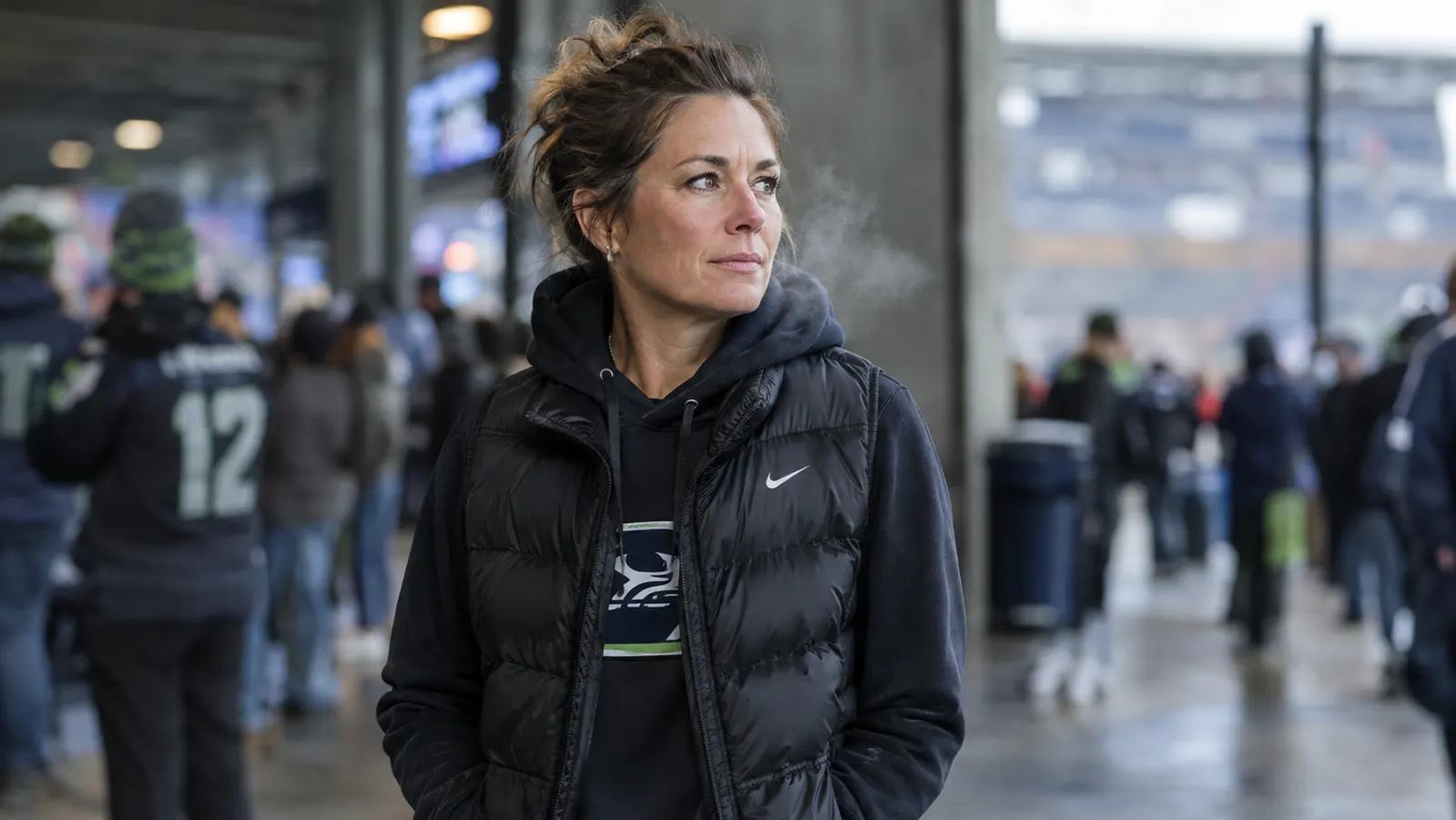
There is a specific kind of cold you only meet at a football game. It is not the cold of walking from the car to the grocery store. It is the cold of sitting still for three hours while the wind moves across an open stadium and the sun drops behind the press box. I know it well. I am Tamika, I live outside Charlotte, and between Friday nights watching my son Jalen play high school football and the handful of pro and college games I go to every season, I have spent a lot of evenings trying to stay warm without dressing like I was going skiing. Last November I sat through a night game where the temperature dropped from 44 at kickoff to 31 by the fourth quarter. By the end of the third I could not feel my toes, and I spent the best plays of the game thinking about the heater in my car. That was the night I stopped guessing and started building a system.
The ORORO heated vest changed the math for me. It is the piece of gear I now reach for before any game day, and this guide is the exact routine I use: how I layer it, how I set the heat, how I manage the battery, and the mistakes I learned the hard way so you do not have to. I have worn it to Friday night high school games, a cold October college game, and a rainy November game where the stands were basically a wind tunnel. It has worked every time.
Skip the parka and stay warm with the ORORO heated vest
This is the vest I wear to every cold game now. It heats four zones, lasts hours on a charge, and layers under your team gear so you still look like a fan, not a marshmallow.
Amazon Check Today's Price on Amazon →Step 1: Start with the right base layer
Before the vest does anything, you need a base layer that breathes. I wear a thin long-sleeve shirt, usually the same kind I wear to the gym. Cotton is the enemy here. I learned that the hard way one Friday night in September when I wore a cotton sweatshirt under the vest. I was warm for the first quarter, then the walk from the car caught up with me, and by halftime I was damp and miserable. If you sweat even a little on the walk from the car, cotton holds that moisture against your skin and you will be colder by halftime than you were at kickoff.
The ORORO goes on over that base layer, directly against your shirt, with your team hoodie or jersey on top. That is the order that matters. The vest has to sit close to your body so the heat transfers into you instead of heating the air between you and your hoodie. I know it is tempting to put the vest over your hoodie so you can see it, but you will be warmer and honestly still cute with it underneath.
If it is a really cold night, I add a thin fleece between the base layer and the vest. I skip the puffy mid layers. The whole point of the ORORO is that you do not need them, and the more layers you stack over the vest, the more the heat has to travel before it reaches you. On a 28 degree night I wore a long-sleeve base layer, a thin fleece, the ORORO, and my team hoodie, and I was comfortable through the whole game.
Step 2: Charge and pack the battery the night before
The ORORO runs off a slim battery pack that clips into a pocket on the inside of the vest. I charge it the night before a game, not the morning of. Game days are chaotic. The morning of a noon kickoff, I am packing snacks and finding Jalen's cleats and pretending I remembered to thaw something for dinner. Charging the battery is the one thing I refuse to leave for that chaos. I plug it in on Friday night along with my phone, so when Saturday morning comes, the little light on the battery is green and I can just grab it and go.
I also keep a second charged battery in my glove box. The vest is warm enough on one battery for a full game, but I tailgate first, and that tailgate is the best part of my week. I would rather burn battery in the parking lot and swap in a fresh one for the walk to the gate than ration my heat all day. Darnell thinks I am overprepared until he is standing next to me in the fourth quarter with his hands in his pockets, and I am still toasty.
One thing the manual tells you that I will repeat: the battery needs to click fully into the pocket clip. The first time I used the vest, I thought it was broken because nothing got warm. The battery had not seated all the way. Push until you hear it click. It is a small thing, but it is the difference between a warm game and a very confusing cold one.
Step 3: Turn it on before you leave the car
This is the step most people get wrong. They put the vest on in the parking lot, wait until they are shivering in their seats, and then turn it on. Now they are cold and waiting for the heat to arrive. The ORORO heats up fast, but why spend one minute being cold when you can spend zero? I learned this at a game last season when I waited until we were in our seats to turn it on, and then spent the whole first quarter with my arms crossed waiting for warmth.
I turn mine to high about ten minutes before I leave the car. By the time I have walked through the parking lot, shown my ticket, found our seats, and settled in, the vest is already radiating heat and I have not felt the cold once. On a really cold day I will turn it on while I am still packing up the tailgate, so the heat is already moving before I step out of the wind.
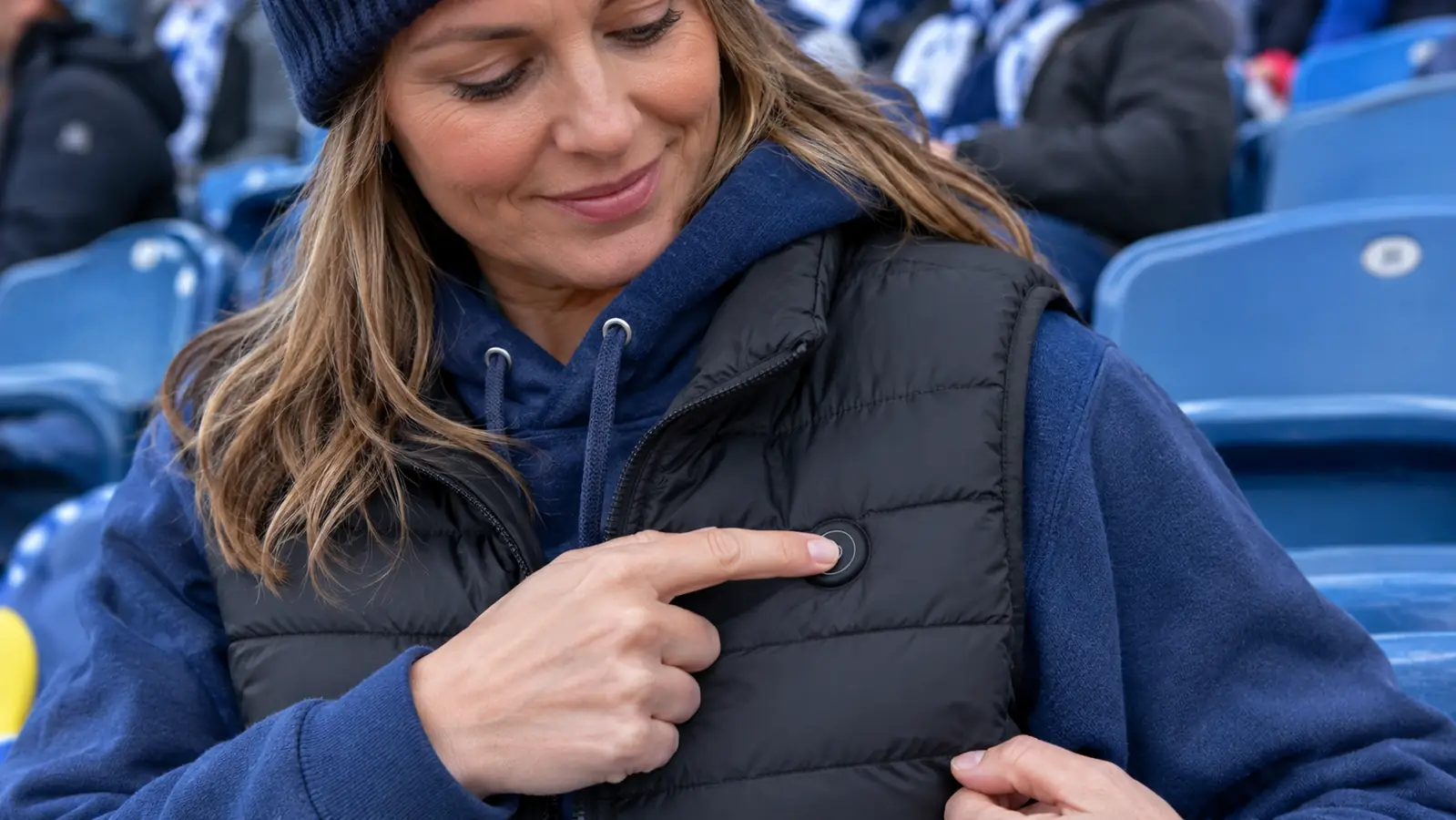
The control is a single small button on the left chest. One press turns it on. Each press cycles through high, medium, low, and off. Three small lights on the button show you the level. I can work it one-handed through my jacket, which matters when I am holding a hot chocolate in the other hand.

Step 4: Set the heat for the first half, then adjust at halftime
Here is the system I have landed on after a lot of trial and error. I start on high for the first ten or fifteen minutes to warm the vest up. Then I drop to medium, which is my everyday setting. It is warm enough that I forget I am wearing it, and the battery lasts longer. On a typical game day that means I turn it on in the parking lot on high, walk to the gate, and by the time the anthem starts I have already dropped it to medium.
At halftime I check in with myself. If I am comfortable, I leave it on medium. If the wind has picked up or the temperature has dropped as the sun went down, I bump it back to high for the third quarter. The vest heats four zones: chest, back, and both sides. When the wind is coming straight at us, I feel it most on my chest and I want the heat there doing its job. At a game in early December the temperature fell from 38 at kickoff to 29 by halftime, and that halftime bump to high is the only reason I made it to the final whistle without going to warm up in the concourse.
Low is for the fourth quarter when the game is basically decided and I am just enjoying the moment. It is also what I use at a mild game, around 45 degrees, where I mostly need to take the edge off instead of fighting the cold. If I am sitting in the sun and the wind is calm, low is plenty.
Step 5: Do the little things that keep the cold out
The ORORO does the heavy lifting, but the small stuff is what makes the difference between comfortable and truly cozy. I wear a knit hat that covers my ears, a scarf or a neck gaiter, and gloves that work with my phone. Cold hands and a cold neck will make you miserable even when your core is perfectly warm. I keep a pair of thin gloves in my coat pocket all season, the kind with the touchscreen fingertips, so I can check the score without taking them off.
I also bring a stadium blanket for my legs. The vest warms my core and the blanket handles my lap. Together they mean I do not need my heaviest coat, which is the whole point. I can wear my team hoodie and look like a fan instead of a person who got lost on the way to the slopes. I fold the blanket over the back of the seat so it is already there when I sit down, and I tuck it around my knees before the second quarter.
And I always check the forecast before I leave, because the vest earns its place differently on different days. A sunny 40 degree afternoon is a medium day. A windy 30 degree night game is a high day. Knowing which one I am walking into lets me set up the whole day correctly, from the base layer to the spare battery.
What Else Helps
Beyond the vest, the biggest upgrade I made was buying a second ORORO battery. It is not expensive and it removes the one worry I had about the whole system, which was running out of heat in the fourth quarter. One battery in the vest and one in my pocket means I have never once been cold because I was saving power. I swap them at halftime when I am already standing up to stretch.
I also wash the vest the right way. It is machine washable, but the battery comes out first and the cord gets tucked into the little pocket so it does not snag. I wash it on gentle in cold water and hang it to dry. I made the mistake of putting it in the dryer once. The vest survived, but the fabric felt different and I never did it again. The care tag is small but worth reading.
If you go to a lot of games, the ORORO pays for itself in how much better the whole experience is. I used to spend the second half thinking about being cold. Now I spend the second half thinking about the game, and that is exactly what I am there for. I have worn it to every game since November, and I do not plan on going back.
I used to spend the second half thinking about being cold. Now I spend the second half thinking about the game.
Make every cold game a comfortable one with the ORORO
One battery covers a full game, four heating zones keep your core warm, and it layers under your team gear so you still look like you. This is the vest I recommend to every friend who tailgates in November.
Amazon Check Today's Price on Amazon →