

I have sat through a lot of cold games. The kind where the cold comes up through the soles of your boots, where the person next to you is blowing on their hands by the second quarter, and where you start checking the scoreboard clock not because the game is close but because your toes have gone numb. For years my answer was more layers. A base layer, a sweater, a heavy coat, a blanket over my lap, hand warmers in my pockets. It worked, sort of. I also looked like I was camping. So when I kept hearing about the ORORO heated vest, I was interested and skeptical at the same time. Another gadget to charge. Another thing to lose in the stands. Another piece of gear that works great in the product photos and forgets to work at the actual game. This is my honest review after a full season of wearing one, including the things I wish somebody had told me before I bought it.
Quick context: I wore it to Friday night high school games with my son Jalen, to a couple of college games with my husband Darnell, to one road trip game where we tailgated out of the back of our midsize SUV, and around the house on Sundays during watch parties when I refused to turn up the thermostat. That last one mattered more than I expected.
The Quick Verdict
The ORORO won't replace your heavy coat on the worst nights, but it will keep your core warm through a full game on a battery that actually lasts. Buy it for the back heat, understand the tradeoffs, and you'll wonder why you waited this long.
Amazon Check Today's Price →The vest I reached for at every cold game this season
Four heating zones, three heat settings, and a battery that held up through four quarters. See today's price and the current reviews on Amazon.
Amazon Check Today's Price on Amazon →How I've Used It
I ordered the ORORO in late October, before the first real cold snap of the season. My plan was simple: wear it under a lighter jacket on the walk in, then wear it as the outer layer once we were in our seats. That plan turned out to be right on some nights and wrong on others. On a 40 degree evening with no wind, the vest over a team hoodie was plenty. On a 34 degree night with wind coming off the field, I was very glad I had a shell on top.
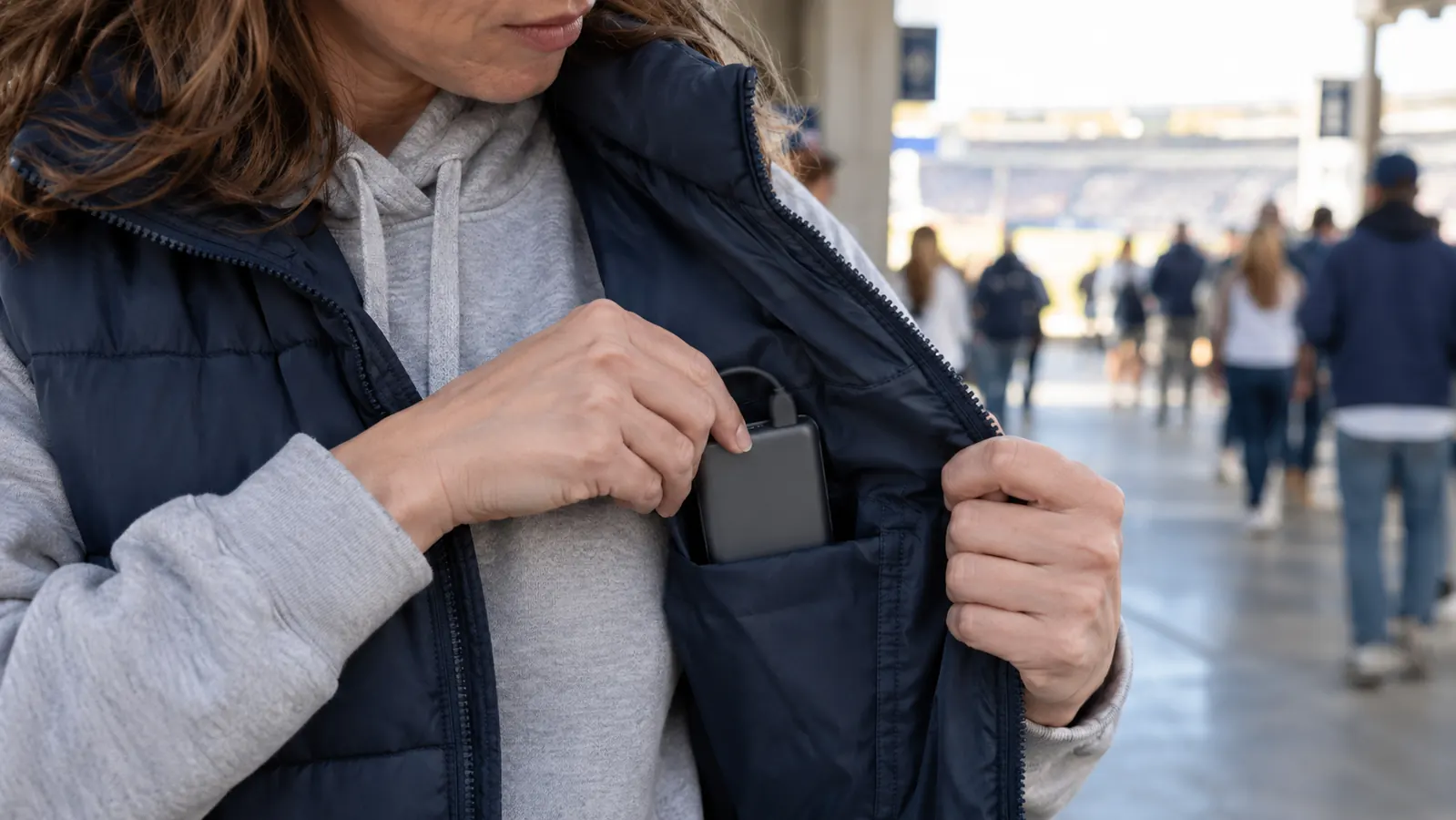
The vest has four heating zones, two in the back and two in the chest. The battery packs into the inside pocket on the left side, and a small cord runs up toward the collar. There are three heat settings controlled by a button on the chest. I mostly lived on medium. High was for the first ten minutes in the seat while the cold soaked in. Low was for the ride home, when the car heater was doing most of the work anyway.
I wore it roughly twice a week from October through January. Friday nights for Jalen's games, a few Saturdays for my team, one road trip, and plenty of Sundays on the couch during watch parties. The part I didn't expect was how often I reached for it at home. The thermostat stays where Darnell likes it, which is not where I like it, and the vest settled that argument without a single word.
What Nobody Tells You Before You Buy One
Here is the thing that never shows up in the product photos: the heat is in your core, not your arms. The vest warms your back and your chest, which is exactly where cold stadium seating gets you first, but your arms stay whatever temperature they were going to be. On a genuinely cold night I still needed a coat over the vest, or at least a shell that blocks wind. Think of the ORORO as the warmest base layer you own, not a replacement for a parka.
The battery is the other thing nobody mentions. It is not heavy, but it is a solid little block in your inside pocket, and you will feel it when you bend over to pick up your bag or reach for something under your seat. It also means the left side of the vest sits a little differently from the right. You get used to it. I stopped noticing it by the second game. But it is real, and I would rather tell you now than have you discover it in the parking lot.
And there is the cord. A small cord runs from the battery up to the collar, and if you wash the vest without taking the battery out first, you will have a bad day. The instructions say this clearly. I am saying it again because it is the easiest mistake to make on a Sunday night when you are tired and just want to throw everything in the machine.
How the Heat Actually Feels
The heat takes about a minute to come up, maybe ninety seconds on high. You press the button, you feel a little warmth start in the middle of your back, and then it spreads outward. The back heat is the star of the show. Sitting in a stadium seat, your back is pressed against cold plastic or cold metal, and that is where the cold gets you first. The ORORO puts heat exactly there, and it changes the whole experience of a game.
The chest heat is gentler. It warms the front, which is nice for the walk to the stadium and for standing around at the tailgate, but it is not going to feel like a heating pad pressed against your skin. It takes the edge off. On medium, I would describe it as the feeling of sitting near a fire without the smoke. On high, it is more noticeable, but I rarely needed high for more than a few minutes.
One honest note: this is not a furnace. On the coldest night of the season, with the wind howling and the temperature in the twenties, the vest alone was not enough. I wore it under a coat and I was comfortable in a way I had never been before, but I was not toasty. The vest's job is to keep your core warm so the rest of you can handle the cold. It does that job well, and it does not pretend to do more.
The night it hit 34 degrees with wind coming off the field, my core stayed warm for all four quarters while my hands froze. That is the honest tradeoff in one sentence.
The Battery, the Wash Cycle, and Other Things I Learned the Hard Way
Battery life surprised me in the right direction. On medium, I got through a full game, the walk back to the SUV, and most of the ride home on a single charge. On high, it was more like half a game. I got into the habit of charging it the night before a game, same as my phone, and I never had it die on me in the fourth quarter.
Charging is simple. The battery charges with a USB cable, and it takes a few hours to top up. I bought a second battery before the road trip game, and I recommend that if you are going to be out all day. The vest works fine with one battery. The second one just means you never have to think about it, and not thinking about it is the whole point.
Washing: remove the battery, unplug the cord, and the vest goes in the machine on a gentle cycle. I hung mine to dry. It came out fine, no shrinking, no damage to the wiring. But I will be honest, I washed it less often than I should have, because taking the battery out and threading the cord back through felt like a small chore at 11pm on a Sunday. It is a five minute job. It just does not feel like one when you are tired.
What I'd Change
If I could change one thing, it would be the collar. The vest has a low collar, and on a windy night the cold gets you right at the neck. I solved it with a neck gaiter, which I already owned, but I would have loved a higher collar built in. It is the one design choice that seems obvious once you have worn it in real wind.
I would also move the battery pocket a little lower. As it is, the battery sits at your ribs, and it can dig in when you lean forward in a seat for a few hours. Moving it down toward the hem would make it less noticeable. It is a small thing, but small things add up over a season.
And I will say the sizing runs a little snug if you plan to layer. I wear a medium in most tops, and the medium ORORO fits fine over a hoodie, but it is not roomy. If you want to wear a thick sweater under it, size up. If you are wearing it over a base layer or a t-shirt, your normal size is right. Read the size chart and measure, because returns are a hassle.

How It Compares to What I Used Before
Before the ORORO, my cold game system was a heavy coat, a blanket over my lap, hand warmers in my gloves, and a thermos of something hot. It worked, but it was a lot of stuff to carry, and by the fourth quarter the blanket was on the floor and the hand warmers had gone cold. The vest replaced most of that. I still bring the gloves and the thermos. I stopped bringing the blanket, and my bag got a lot lighter.
I also considered a heated jacket instead of a vest. The jacket adds heat in the arms, which sounds great, but it is bulkier, and most of the time I did not need arm heat. The vest let me wear my team hoodie and still look like myself. That mattered to me more than I expected. Looking like a normal person at a game, instead of a pile of blankets, is worth something.
One more comparison, because I tested it: the heated seats at the stadium. On the nights I had a seat with a heated cushion, I still wore the vest, because the cushion only warms one spot and the vest warms your whole core while you walk around. They are not the same thing. If you have to pick one, the vest travels with you.
What I'd Tell a Friend in the Parking Lot
If we were standing by the tailgate before kickoff and you asked me whether to buy this, here is what I would say. Buy it for the back heat, because that is where stadium seats steal your warmth. Charge it the night before. Wear it over a hoodie on mild nights and under a coat on the brutal ones. And do not expect it to fix your hands and feet, because it will not.
I would also tell you that it made me enjoy cold games again. I stopped dreading the fourth quarter. I stopped counting the minutes. I watched the game, which is the entire point of going. That is the honest measure of whether this vest works, and for me it passed.
What I Liked
- Back heat hits exactly where stadium seating steals warmth
- Battery lasts a full game on medium, with charge to spare
- Lightweight enough to wear under a coat or over a hoodie
- Three heat settings give you real control
- Washes fine when you remember to remove the battery first
- No bulk, so you still look like yourself on game day
Where It Falls Short
- Arms stay cold, so you still need a shell on the worst nights
- Battery block in the pocket is noticeable when you bend over
- Low collar leaves your neck exposed to wind
- Runs snug if you like to layer thick sweaters
- One more thing to charge the night before a game
Who This Is For
This is for the person who sits in cold seats and spends the whole game thinking about how cold they are instead of watching the game. It is for the parent at Friday night football, the season ticket holder in the windy end zone, the tailgater who stands around for two hours before kickoff. If you are already the person who brings the blanket and the hand warmers, this replaces half your bag.
It is also for the person who cares about how they look. I did not want to spend every cold Saturday wrapped in a sleeping bag. The ORORO is slim, it fits under a coat, and it lets me wear the gear I actually want to wear. For me, that was the difference between a gadget I used once and a piece of gear I reached for all season.
Who Should Skip It
Skip it if you run warm naturally, because you will probably find the heat unnecessary and the battery annoying. Skip it if your cold weather problem is mostly your hands and feet, because the vest does nothing for those. And skip it if you want one piece of gear to fully replace your winter coat, because it will not. The ORORO is a tool, not a replacement for a real winter coat. It does one job and does it well.
And skip it if you are not willing to charge one more thing before you leave the house, because that is the small price of admission. This vest asks for a little routine in exchange for a lot of comfort. If that trade does not sound good to you, you will probably leave it in the drawer by December.
The honest bottom line after a full season
Four quarters of warmth on a single charge, with tradeoffs I can live with. If you are on the fence, read the current reviews and check today's price on Amazon.
Amazon Check Today's Price on Amazon →